
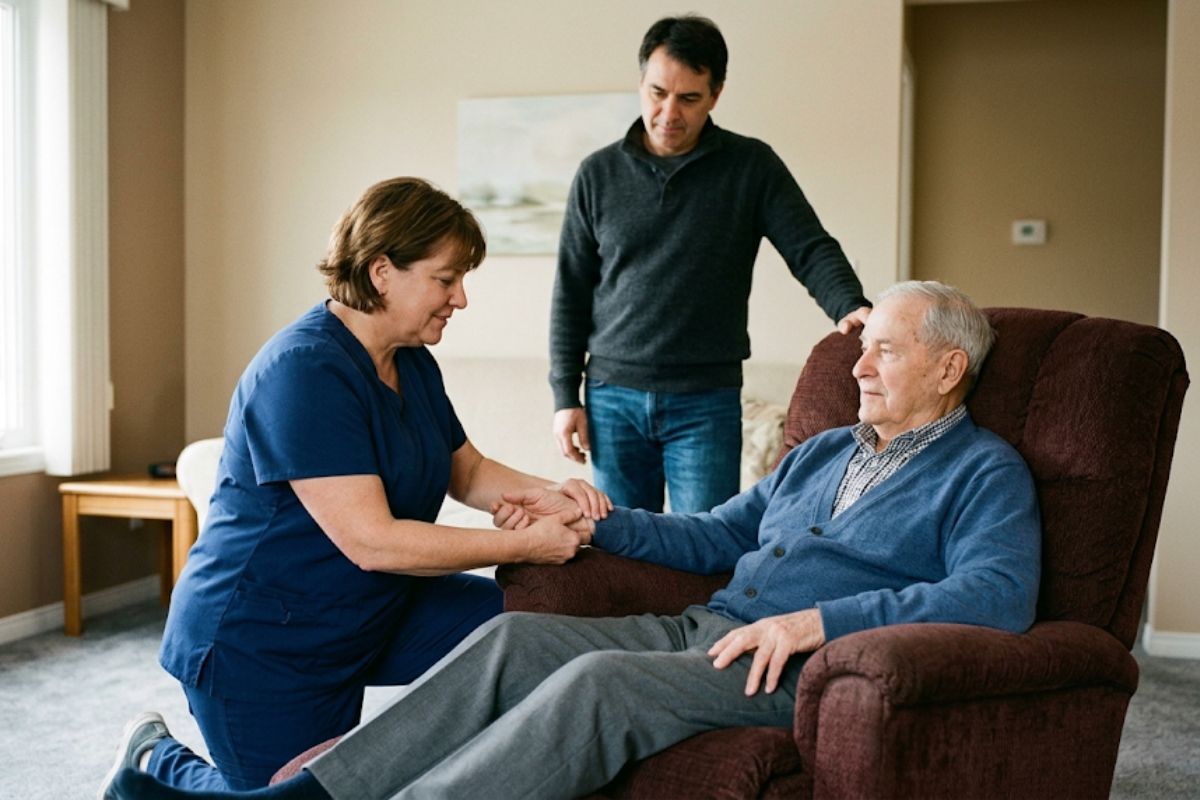
In Cape Girardeau, Missouri, the typical hospice day does not happen in a facility. It happens in a private residence, with a nurse at the front door and a family caregiver in the kitchen. Nationally, 98.78% of hospice days in 2022 were routine home care, the level delivered wherever the patient already lives. Hospice care at home is not a special request or an upgrade. It is the standard version of the benefit, and the other levels exist to support it when something goes wrong.
Where Hospice Care at Home Can Be Delivered
Home means the place you call home. That includes a house, an apartment, a family member’s spare room, an assisted living apartment, and a room in a nursing facility. MedlinePlus lists four common settings for hospice: at home, at a hospice center, in a hospital, and in a skilled nursing facility. The care team travels to whichever one applies, so a move is rarely necessary.
The Four Levels of Care, and How Often Each Is Used
Every Medicare-certified hospice provides four levels of care. The numbers show how lopsided the usage is in favor of home.
| Level of care | Where it happens | Share of hospice days, 2022 |
|---|---|---|
| Routine home care | Wherever the patient lives | 98.78% |
| General inpatient care | Hospital or inpatient hospice unit | 0.88% |
| Inpatient respite care | Facility, up to 5 days at a time | 0.27% |
| Continuous home care | The home, during a short crisis period | 0.07% |
Routine home care accounted for 98.78% of hospice days in 2022, according to national levels of care reporting. General inpatient care, used in a hospital or inpatient hospice unit for symptoms that cannot be controlled at home, made up 0.88% of days. Inpatient respite care, which gives a family caregiver a break for up to 5 days at a time in a facility, made up 0.27%. Continuous home care, which brings extended nursing hours into the home during a short crisis period, made up 0.07%. Put simply, hospice is a home service that has a hospital escape hatch, not the reverse.
Who Actually Comes to the House
A home hospice plan usually looks like this in a normal week:
- A registered nurse visits on a set schedule, typically once or twice a week to start, more often as needs change, and manages pain, medications, and symptoms.
- A hospice aide helps with bathing, dressing, and personal care, often two or three times a week.
- A social worker handles practical matters, from paperwork to family logistics.
- A chaplain is available for spiritual support, if the family wants it.
- Volunteers sit with the patient so a caregiver can leave the house.
- An on-call nurse answers the phone 24 hours a day and comes out when something changes at 3 a.m.
Between visits, the family caregiver provides the day-to-day care. That is the honest tradeoff of home hospice, and it is the reason our caregiver support resources exist. Caregivers who plan for relief early hold up far better than those who wait until they are running on empty, a pattern we cover in our guide to managing caregiver stress.
What Arrives With the Team
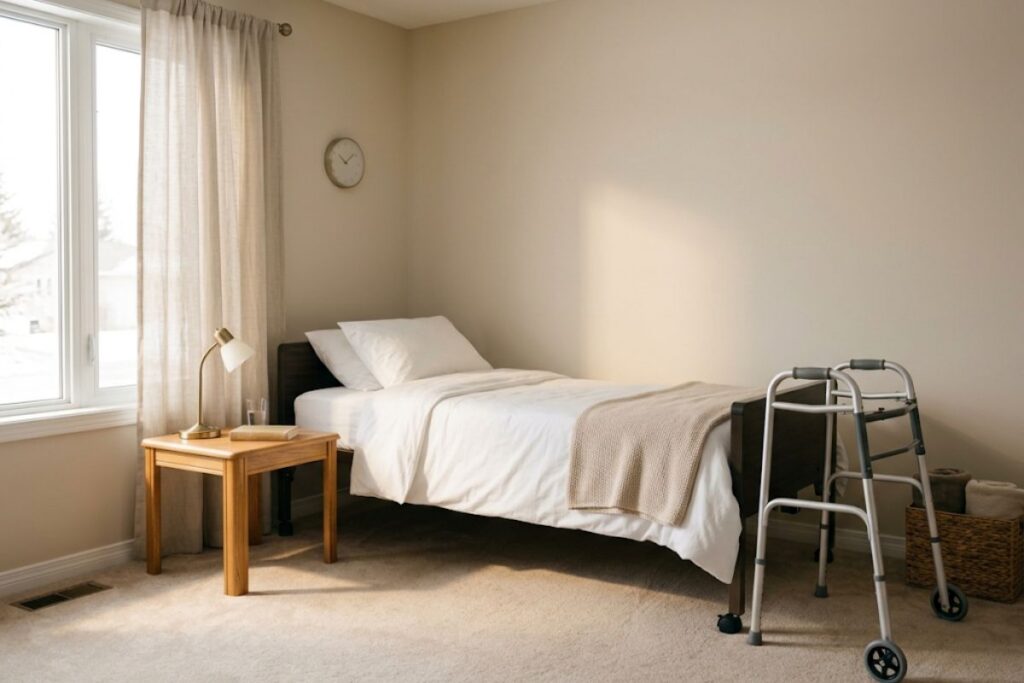
The equipment usually shows up before the first full week is out: a hospital bed if it is needed, an over-bed table, a wheelchair or walker, oxygen, a bedside commode, wound supplies, gloves, and the medications for pain and symptom control. Under the Medicare hospice benefit, those items and services are covered when they are part of the plan of care, with a copayment of up to $5 per prescription for symptom-management drugs and 5% coinsurance for inpatient respite care. Room and board is the exception, since the benefit does not pay for the cost of the residence itself.
How Long People Stay at Home
Length of stay at home is shorter than most families expect. For patients whose care was delivered in a private residence in 2022, the median stay was 25 days and the average was 98 days. That gap tells the same story as the national numbers overall: a minority receive months of support, while half receive less than four weeks. Starting sooner is what turns hospice at home from a scramble into a plan.
Can hospice care start at home the same week we call?
Often yes. An evaluation can usually happen within a day, and once certification and admission are complete, the first nursing visit and equipment delivery typically follow quickly.
What happens if symptoms get out of control at home?
The on-call nurse responds first, and continuous home care or general inpatient care is available if symptoms cannot be managed at the house.
Can someone in assisted living get hospice?
Yes. Hospice comes to the assisted living apartment or nursing room, and the facility continues its own services. The hospice benefit does not pay the facility’s room and board.
Does someone have to be with the patient at all times?
Not at admission, but as decline progresses most families need a consistent caregiver present. The team helps you plan for that shift before it becomes urgent.
If keeping your loved one at home is the priority, the sooner the team is in place, the more of that time actually feels like home. Contact us to schedule an in-home evaluation and we will map out exactly what care in your house would look like.